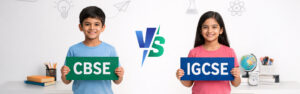
Choosing the right curriculum plays a crucial role in shaping a student’s academic journey and future opportunities. In India, two popular education boards that parents often consider are IGCSE (International General Certificate of Secondary Education) and CBSE (Central Board of Secondary Education). Both systems have their strengths, but they differ significantly in teaching approach, assessment methods, and global exposure.
For parents exploring options and noticing announcements like ADMISSIONS OPEN for IGCSE SCHOOL in KOLKATA 2026–27, understanding these differences can help them make a well-informed decision for their child’s education.
Understanding the IGCSE Curriculum
The IGCSE curriculum, offered by Cambridge Assessment International Education, is an internationally recognized program followed by schools across the world. It is designed to provide students with a balanced education that emphasizes conceptual understanding, analytical thinking, and practical learning.
IGCSE focuses on developing independent learners. Instead of relying heavily on memorization, the curriculum encourages students to question, explore, and apply their knowledge to real-world situations.
Students studying under IGCSE also have access to a wide variety of subjects, allowing them to choose according to their interests and career aspirations. This flexibility makes the curriculum particularly appealing for students who want to pursue global academic opportunities.
Understanding the CBSE Curriculum
CBSE, on the other hand, is one of the most widely followed education boards in India. It is managed by the Central Board of Secondary Education and is recognized by universities and institutions throughout the country.
The CBSE curriculum provides a structured academic framework with a strong emphasis on science, mathematics, and theoretical knowledge. It is particularly suitable for students who plan to prepare for competitive examinations in India, such as engineering and medical entrance tests.
CBSE schools focus on standardized learning and ensure consistency in education across the country. This makes it easier for students who frequently relocate within India.
Teaching Methodology
One of the biggest differences between IGCSE and CBSE lies in their teaching approach.
IGCSE follows a student-centered learning model where teachers act as facilitators rather than just instructors. Students are encouraged to participate in discussions, projects, research activities, and presentations. This interactive approach helps them develop creativity, communication skills, and critical thinking.
CBSE traditionally follows a more structured teaching method that focuses on textbooks and examinations. Although CBSE has introduced reforms to promote experiential learning, the system still tends to emphasize syllabus completion and exam preparation.
Subject Flexibility
IGCSE offers a broad range of subjects including languages, humanities, sciences, creative arts, and vocational subjects. Students have the freedom to choose combinations based on their interests and long-term career goals.
For example, a student interested in media, design, or performing arts can explore those areas alongside academic subjects. This flexibility allows students to discover their strengths early and develop a focused academic path.
In CBSE, subject options are comparatively more structured. Students generally choose between science, commerce, or humanities streams after secondary school, which can sometimes limit early exploration of diverse fields.
Assessment and Evaluation
Another key difference between the two boards is the evaluation system.
IGCSE uses a balanced assessment model that includes written examinations, coursework, practical assessments, and projects. This ensures that students are evaluated on multiple aspects of learning rather than relying solely on final exams.
CBSE assessments, although evolving, still rely largely on written examinations. While internal assessments and projects are part of the evaluation process, final board exams continue to carry significant weight.
Students who perform better in practical and research-based environments often find the IGCSE evaluation system more supportive.
Global Recognition
One of the biggest advantages of IGCSE is its international recognition. The curriculum prepares students for advanced programs such as Cambridge International A Levels and the International Baccalaureate Diploma Programme, which are widely accepted by universities worldwide.
This global orientation makes IGCSE an attractive choice for families who want their children to have the option of studying abroad.
CBSE is highly respected within India and is recognized by many international universities as well. However, it primarily focuses on preparing students for higher education within the Indian academic system.
Skill Development
IGCSE strongly emphasizes skill development. Students are trained to conduct research, analyze information, present ideas clearly, and solve complex problems. These skills are essential for higher education and professional success in a global environment.
CBSE also promotes skill development but often within the framework of a more exam-oriented system. While recent educational reforms aim to improve experiential learning, the traditional focus on theoretical knowledge still remains prominent.
Which Curriculum Is Better?
The answer largely depends on the student’s goals and learning style.
If a student plans to pursue higher education abroad, prefers project-based learning, and wants exposure to international academic standards, IGCSE can be an excellent choice.
On the other hand, students who plan to appear for competitive exams in India and prefer a structured syllabus may find CBSE more suitable.
For parents currently exploring options and seeing announcements like ADMISSIONS OPEN IGCSE SCHOOL KOLKATA 2026–27, it may be worth considering how an international curriculum can provide broader academic exposure and skill development.
Conclusion
Both IGCSE and CBSE offer valuable educational pathways, but they differ in philosophy, teaching methods, and academic outcomes. While CBSE provides a strong foundation for national-level education and competitive exams, IGCSE focuses on global learning, flexibility, and holistic development.
Ultimately, the best curriculum is the one that aligns with a child’s interests, learning style, and future aspirations. Parents should carefully evaluate these factors to ensure their child receives an education that prepares them for both academic success and real-world challenges.